

Hey—it's been a while.
After dropping a flurry of articles discussing the 2025 Stanley Cup Finals, life picked up—multiple international weddings, a beach vacation, and far too much time on Twitter (never calling it X, sorry Elon). I got away from the writing cadence, and lost some momentum. It happens, but I want to live by what I preach, and there’s no excuse not to get back into the swing of things and talk about things that interest me. Despite it being roughly a month since the Panthers lifted the 34 lb silver chalice for the second consecutive summer, I’ve still been thinking about the Florida Panthers. Not about their punishing forecheck, nor the heroic efforts of individual players, but something else more relatable.
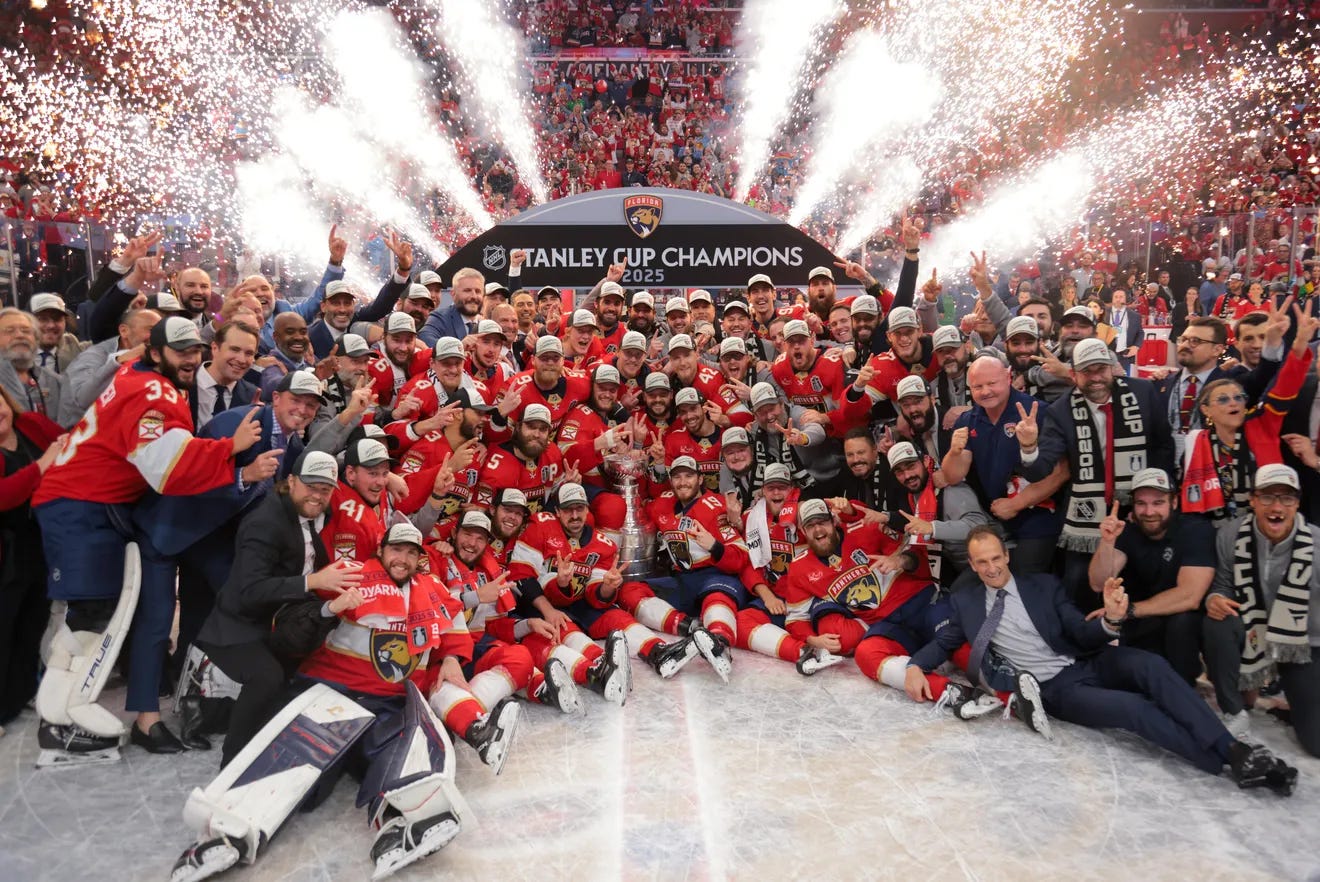
These Florida Panthers are a really interesting case study in calculated risk-taking, masterful decision-making, and a supercharged environment that extends beyond the sport of hockey. While I enjoyed writing about the Finals live at the moment, it's less interesting to me now to dwell on the specifics of what happened, and more about what made this team special, and allowed them to secure back-to-back titles. The now mini-dynasty in South Florida shows us a roadmap to improve performance, amplify results, and enhance decision making. You don’t have to be a die-hard hockey fan to take something valuable from these lessons. Let’s dive in.
Environment Matters
You can be the best singer in the world, but if the rest of the band is subpar, you are probably not going to sell that many records (this analogy would’ve crushed in the early 2000’s, but the point still holds). You could be an incredible performer, but if your firm or team is struggling, it will likely put a ceiling on how far you go. Sports, entertainment, and the world at large are full of examples of exceptional individual talents that only achieved so much because of the circumstances around them. Would Tom Brady have won six Super Bowls if he was drafted by the Cleveland Browns, or the New York Jets? Unlikely. Would Apple have been as successful if Jobs didn’t meet Wozniak? Maybe, maybe not. On the flip side, what if Dominique Wilkins had been drafted by the Lakers instead of James Worthy? Is he now known as one of the greatest players of all-time? One with multiple championships rather than primarily known for the Dunk Contest spectacle. Where you are matters. Who you're with, matters. The best version of yourself, and your greatest success might lie on the other side of finding the right environment. Whether it's your career, living situation or relationships, ask yourself: Are your surroundings enabling your success? Or are they contributing to the drift of mediocrity? This Florida Panthers team is full of examples of players, who for various reasons, were either not reaching their potential, or needed a new environment to elevate their game. Matthew Tkachuk, Sam Reinhart, and Sam Bennett were all exceptional hockey players (if you make it to the NHL, you are in the top 0.0000001% of anyone who has ever played the sport) - but prior to arriving in Florida, none had truly ascended to superstar status (Tkachuk was definitely the closest, and also the one whose exit had more to do with personal reasons than on-ice results). However, all of them needed to come together in Florida to supercharge their careers - the sum of the whole being greater than the individual parts.
While Tkachuk was a rising star in Calgary, he seemed destined to be a good player on a team that was bound to be mildly competitive at best. The Flames were unable to build the supporting cast and organizational infrastructure necessary to open and sustain a championship window. Bennett and Reinhart were top five draft picks that were floundering on moribund franchises (you could compose a whole all-star team of players the Buffalo Sabres and Calgary Flames have traded, who then went on to win elsewhere). The lesson here is that while every player was “good” in their previous situation, it took them finding the right place, with the right people, to truly realize their full potential.


Matthew Tkachuk, Sam Reinhart, and Sam Bennett at their previous places of employment
This is not a directive to drop everything in your life, quit your job, move to Tibet, and change everything for the sake of change - but it's a worthwhile endeavor for all of us to look at where we are personally and professionally, and ask: “Is this the environment, group, or situation that will allow me to be the best version of myself?” The Panthers are an excellent lesson in the power of finding the right combination of environment and teammates, and never settling until you find your own championship environment. Bonus points if your peak environment also happens to have sunny beaches and no state income tax.
The Road From Good to Great is Built On Risk
At any point, when pursuing something—whether it be a business endeavor, a championship, a career move, a new relationship—there are moments of choice, where one must evaluate risk and reward, and often make tough decisions with lack of clarity or certainty. As the old saying goes: “no risk, no reward.”
When the Florida Panthers started their climb out of the doldrums of the NHL standings in the mid 2010s, just getting the team back to the playoffs seemed like a monumental task. Following a six-year stretch where the team’s best finish was a first-round playoff loss, everything finally seemed to come together in 2021-2022. The core of homegrown stars in Alexander Barkov, Jonathan Huberdeau, and Aaron Ekblad led the Panthers to a Presidents’ Trophy (the award for best record in the regular season) finish. The team then won its first playoff series victory in 26 years, before immediately being swept by the cross-state rivals Tampa Bay Lightning (on their way to their third consecutive Finals appearance). After spending the majority of your franchise’s existence as a laughingstock of the league—this was a tremendous step forward. 99% of teams, people, organizations—whatever you want to use—would have accepted this progress and been thrilled with the direction things were headed. They were still 12 wins away from the ultimate prize, but they had achieved the best record in the organization’s history, won a playoff series for the first time in a quarter century, and still had a core of young stars in their prime. Standing pat, trusting the process, and making small adjustments—would’ve been prudent. General Manager Bill Zito wasn’t interested in being prudent. He wasn’t interested in being “good”; he wanted to be “great”. The Panthers needed to take a swing at greatness.


Zito’s summer 2022 trade for Matthew Tkachuk completely reinvented the Panthers’ identity
When the following summer, a young burgeoning superstar came available (Tkachuk), Zito pounced. He sent two of his best young homegrown players (Huberdeau and defenseman Mackenzie Weegar) in return (big risk, big upside) for the star who wanted out of Alberta. Zito and ownership also fired the coach that had led the team to its record finish while making them one of the highest scoring teams in the league—and chose to replace him with a coach who had been fired or resigned from three other teams. Said coach (Paul Maurice) was also notorious for being hard and demanding on players (big, big risk). It took massive conviction and guts not only from management, but ownership as well, to realize while they were on a “good” path, they were going to need to make some hard choices, and take some calculated risks if they were going to get on the GREAT path.
Author Sahil Bloom often speaks about the importance of finding YOUR path. Paraphrasing the NYT best-selling author: “The worst thing is not being on a bad path, because that is inherently obvious and spurs quick, corrective action, but rather being on a ‘good’ path that isn’t yours, because the pull to stay on it is so strong.” When things are “fine” and “good,” the pull of staying on the set path is so easy. Why risk it getting worse? Why mess with what has worked? But, as the old saying goes, risk and reward: they go hand in hand. The most dangerous trap is being stuck in “good enough”. If you want to find the job of your dreams, it may require the big risk of entering a new field with a lack of experience. If you want to create something, you have to risk feeling dumb or insecure. If you want to build deep and rewarding relationships, you have to take the swing of putting yourself out there. There is probably a reason no great story has ever been told that looks like—“everything was super clear and easy, and no decisions were really that difficult, and everything worked out exactly as planned.” The Panthers are a sports-related example that sometimes to get to great—whatever you define that as—you are going to have to take a large risk at some point, and if you do it in an intelligent way, you can catapult yourself from good to great. The risk of firing your coach (who had also just won the NHL’s Coach of the Year award), and trading two of your best young players (albeit for another great young player), are two of the riskiest things any modern team has done. But Zito knew the trajectory the team had currently been on was one of “good,” and playing it safe would have kept them on that path.
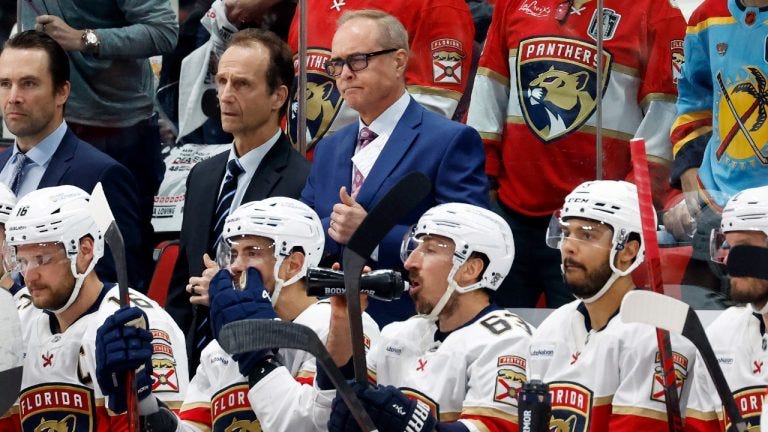
Celebrated now, but at the time the hire of Paul Maurice was met with criticism
Without being comfortable with risk, Zito might have stayed on course, and the hockey landscape looks much different. At some point in your life, personally or professionally—you are going to need to evaluate and get comfortable taking a risk. As clichéd as it might be, the harder that choice, the bigger the risk, usually means the bigger the reward. (Disclaimer: Don’t put all your money on fifteen-leg parlays or crypto.)
Forget Chasing Someone's Example - Create Your Own
Trying to be the best version of someone else is a losing battle. Identifying what makes ourselves unique and valuable, and maximizing our efforts and focus there is the best way to maximize our chances at success. Listen to anyone speak about the NHL playoffs, and it takes all of five seconds to hear: “toughness”, “grit”, and “physicality”. The surface level takeaway of the Panthers journey is that Florida took a chainsaw to its high-scoring, sleek, offensive team and created a tough, defensive minded, mental juggernaut because that is the stereotype of a successful playoff team in hockey. The truth, as it often does, requires a little more nuance.
Yes, they brought in Tkachuk—who was more of an independent play-driver than Jonathan Huberdeau (himself a gifted offensive player, but required more support from linemates), and more physical. However, it took a full-scale commitment from the coaching staff and management to develop a system of play around the players on its roster. Yes Florida is “physical” and “tough to play against” - but the coaches identified the roster’s strengths were around players like Tkachuk, Bennett, and Sasha Barkov who thrived off chances created from forechecking and puck-possession - and less so from the high-flying transition game the team had been playing previously under former coach Andrew Brunette. Had Florida’s reflection from getting swept by the Lightning been—'we need to play like them’, the league probably looks very different right now. Florida looked at what the players on its roster were exceptional at, and built its system around them, rather than what other teams were doing well.
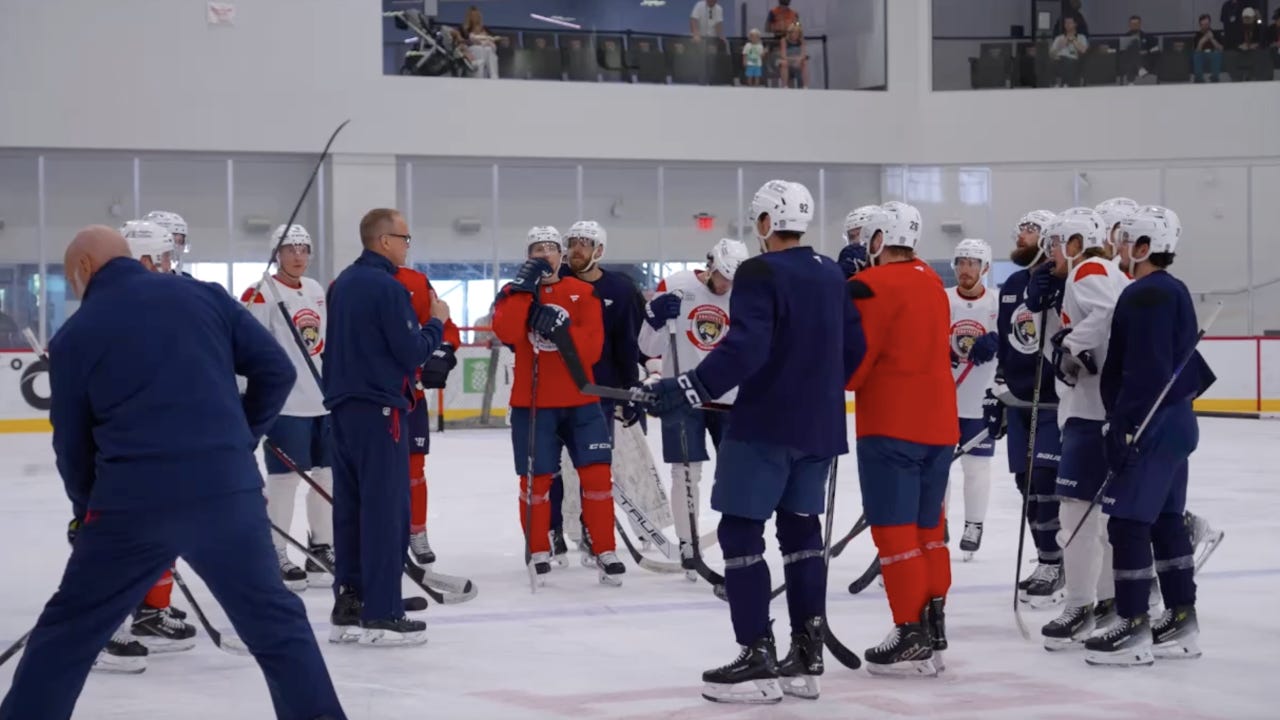
Rather than forcing players to fit a pre-designed system, they designed a system around the strength of its people. How often are we comparing ourselves to others? How much progress has been lost from wasting time and energy looking at co-workers, peers, or strangers on the internet? Driving ourselves crazy with comparison to others. I catch myself often finding pre-determined roles or behaviors, and trying to fit into them rather than doubling down on what I am good at, or what makes me unique. I would be shocked if I’m alone in that feeling. How much better off would we be if we got off of LinkedIn, Instagram, or TikTok and channeled our energy instead into thinking about what our own natural strengths are? The Panthers have shown the results building around and focusing on our strengths and unique identity, instead of chasing a recipe laid out by others. You’ll never be the best version of someone else—but you can be the best version of YOU.
Whose in Your “Front Office”?
While General Manager Bill Zito gets most of the credit for building the Panthers, anyone paying attention realizes the importance of the team alongside him in the front office. Throughout the many post-victory interviews he’s done since winning the Stanley Cup again, Zito’s been quick to deflect focus and credit towards other members of the team’s front office, often citing the importance the group’s input, lack of ego, and different perspectives played in building this team. When there is only a single person making decisions or solving problems—mistakes, bias, and lack of unique perspectives can invite failure. After purchasing the team in 2013, Florida’s owner Vincent Viola made a commitment to invest in the franchise, and not just on player salaries. Viola realized one of my personal favorite insights, that there is no salary cap on what an organization can spend beyond the players on the ice. Viola not only built out a robust infrastructure and new facilities, but supported Zito in making aggressive and unique front office hires to balance out areas that were outside of his expertise. While he had experience as an agent, Zito brought in Shawn Thornton and Roberto Luongo, two former Panthers players who could provide a direct line to the locker room and offer valuable first-hand, on ice experience. Zito made unconventional hires like Sunny Mehta, a former professional poker player and derivatives trader, to be the team’s head of analytics and recently Assistant General Manager. These are just a few of the many, but Zito and others have frequently talked about the extensive discussions this front office consortium had throughout the year and offseason on building this team. Many specifically highlight the group’s ability to check their egos at the door, challenge conventional wisdom, and provide fresh perspectives while having a culture of open dialogue and freedom of debate.


Viola (owner), Thornton, Luongo, and Mehta were just some of front office contributors
While corporate C-suites and boards of directors have ballooned, too often businesses and individuals continue to silo decision making. Either from inability to properly take feedback, or ego inflation keeping us from considering different points of view, anyone would benefit from having a similar supportive and trusted group for advice and feedback. Whether it's friends to bounce ideas off of, or peers to challenge our assumptions—finding fresh perspectives and using others can help sharpen your decision making and check for biases. The key is to make sure that we're considering diverse viewpoints and developing relationships with people who can challenge us to think in different ways while helping prevent us from falling victim to our own blind spots. It’s easy in sports and business to point to the individual’s role in success: the star player, the genius executive. More often than not—as the Panthers have proven—there are frequently a number of key players supporting and auditing the decision making process. The ice level game is the ultimate team game, it only makes sense to view the front office as one as well. Zito and Viola made this a core part of reinventing the franchise, and we’d be wise to consider our own “Front Office” going forward.
The Bigger Picture
Decades from now, this Florida Panthers team will be remembered for their incredible accomplishments on the ice. Qualifying for the playoffs on the final day of the 2023 season, the Panthers went on to three straight Stanley Cup Finals appearances, winning the last two. The memories of strong and unique personalities of the players on the roster will be forged into legend, while many will recount the impressive depth throughout the lineup the team was able to regenerate year after year. For me, the really interesting story of the team has been elsewhere, providing a roadmap anyone would be keen to follow. Beyond punishing body checks and powerful slap shots, a team’s championship DNA is built by a group of people coming together for something bigger than themselves—taking calculated risks, embracing new environments, forging a unique identity, and having a strong and open decision-making group. You don’t have to be an NHL player, front-office representative, athlete, business mogul, or anything special to realize some value from what we’ve learned from the Panthers’ recent run of success. You just need to be open-minded and willing to go further than ice level - you might just find something useful.
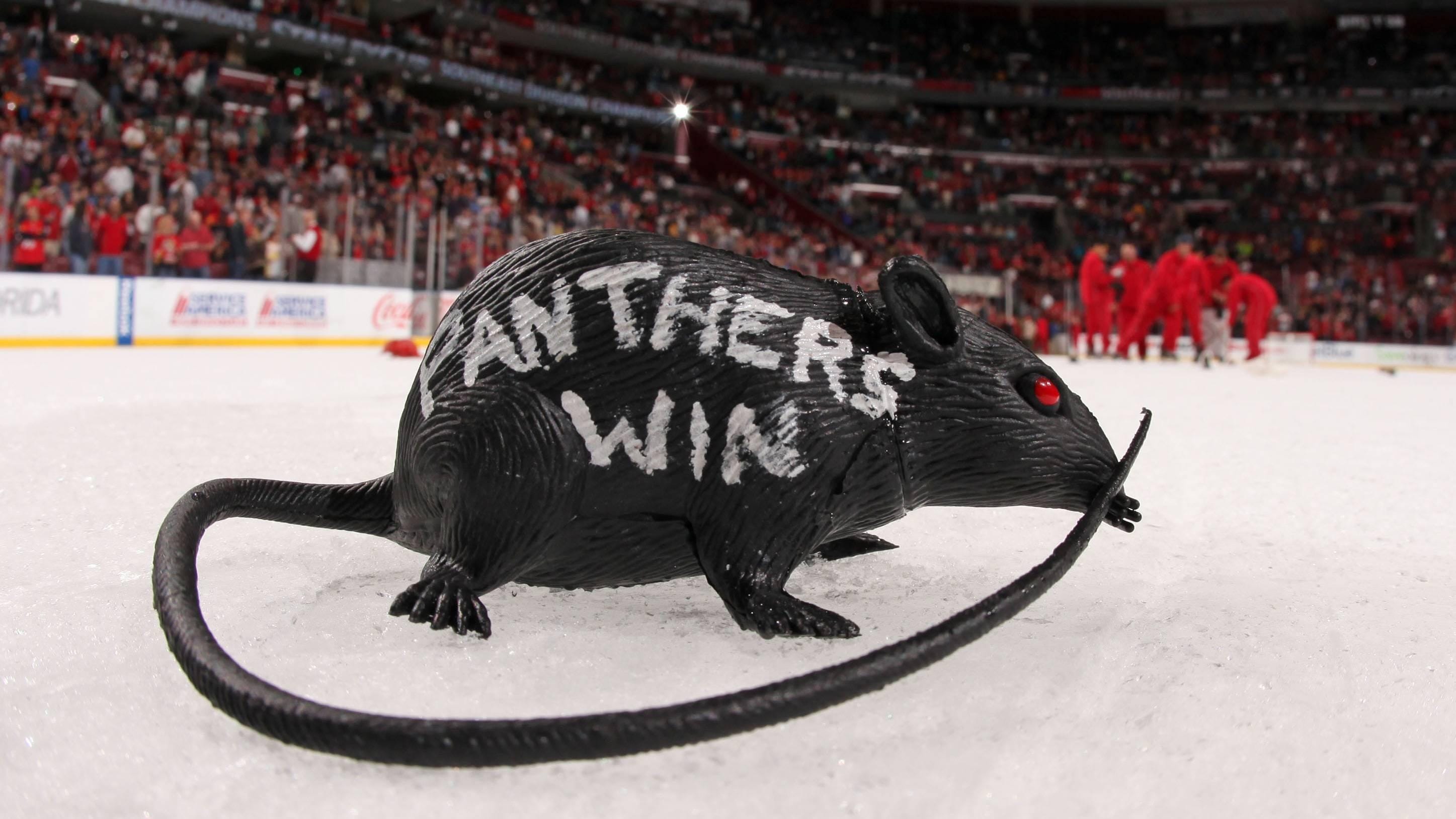
Florida’s famous “rat” victory celebration momento - made famous during the ‘96 Finals run
Elite sports writing ❤️🔥
Fantastic write up. So well structured and thought out. Really dig the lessons you pulled out and clarified for us. Thank you for sharing this!