


There is a certain faction of movies that as soon as I become aware of them, either seeing a preview or watching a trailer – I immediately classify them as “plane movies”. These aren’t movies about planes, involving planes, or have anything to do with instruments of aviation.
For whatever reason, whether quality, tone, cast – these films immediately get added to an internal watchlist that I keep that revolves around the fact that I will one day watch said movies on an airplane. I call these movies: plane movies (this is the high level writing you come here for – I know).
These movies usually sit between 90-120 minutes in length, are of middling quality, but crucially not bad enough that I wouldn’t want to watch them. They also aren’t good enough to either: A) go and see them in a theater or B) command my undivided attention while sitting at home.
All this to say, I found myself on an airplane recently scrolling through the list of available movies on Delta’s seat-back entertainment screen – and landed on a recent entry to the “plane movies” list; 2025’s musical biopic Springsteen: Deliver Me From Nowhere.
The film is not particularly good; it’s a fairly cliché rags-to-riches biopic journey. However, I want to be upfront: this is not a piece of writing about the film, Springsteen’s music, or one of the relevant things a viewer usually considers when watching a two hour music biopic about one of the most famous rock-stars of all-time.
This is about how this seemingly mundane airplane entertainment helped me come to grips with the ever-increasing omnipotence of artificial intelligence in our daily lives.
Yes, you read that right. I just provided a 273 word intro about a mediocre music biopic to relate it to my feelings on the artificial intelligence wave.
Unless you have been living under a rock for the last few years, the rapid development of artificial intelligence and its impact on the economy, jobs, career paths – basically life – has been impossible to ignore. Every day a new deluge of headlines “AI is going to replace [this field]”, “If you are not learning how to automate your job, someone else will”. The hysteria can border on overdramatic, but the impact from this technology is starting to take real shape in reality. Last week, Jack Dorsey’s company Block laid off approximately 40% of its workforce, citing AI’s ability to increase productivity without human expense (paraphrasing mine). Its stock shot up 25% on the news – the voting mechanism that is the stock market effectively applauding 4,000 people being suddenly unemployed.
Being a part of the generation that has spent the first decade of our careers looking to find some place in the world, we’re now experiencing that everything we learned or have been trained on is about to be ripped out from under us. Perfect timing as late stage millennials or early Gen Z approach the time in our lives we should be starting families, buying a house, reaching peak earnings power – you could forgive one for experiencing a little stress about the outlook of things.
There is one specific scene within the first hour of Deliver Me From Nowhere – Bruce is taking his new-found love interest out for a late-night joy ride, basking in the euphoria and excitement of new found love, driving in a new sports car (a symbol of his new found fame and success post The River album). Immediately the scene and the actors’ performances helped me make peace with humanity’s place in the world on the cusp of a new technological revolution.
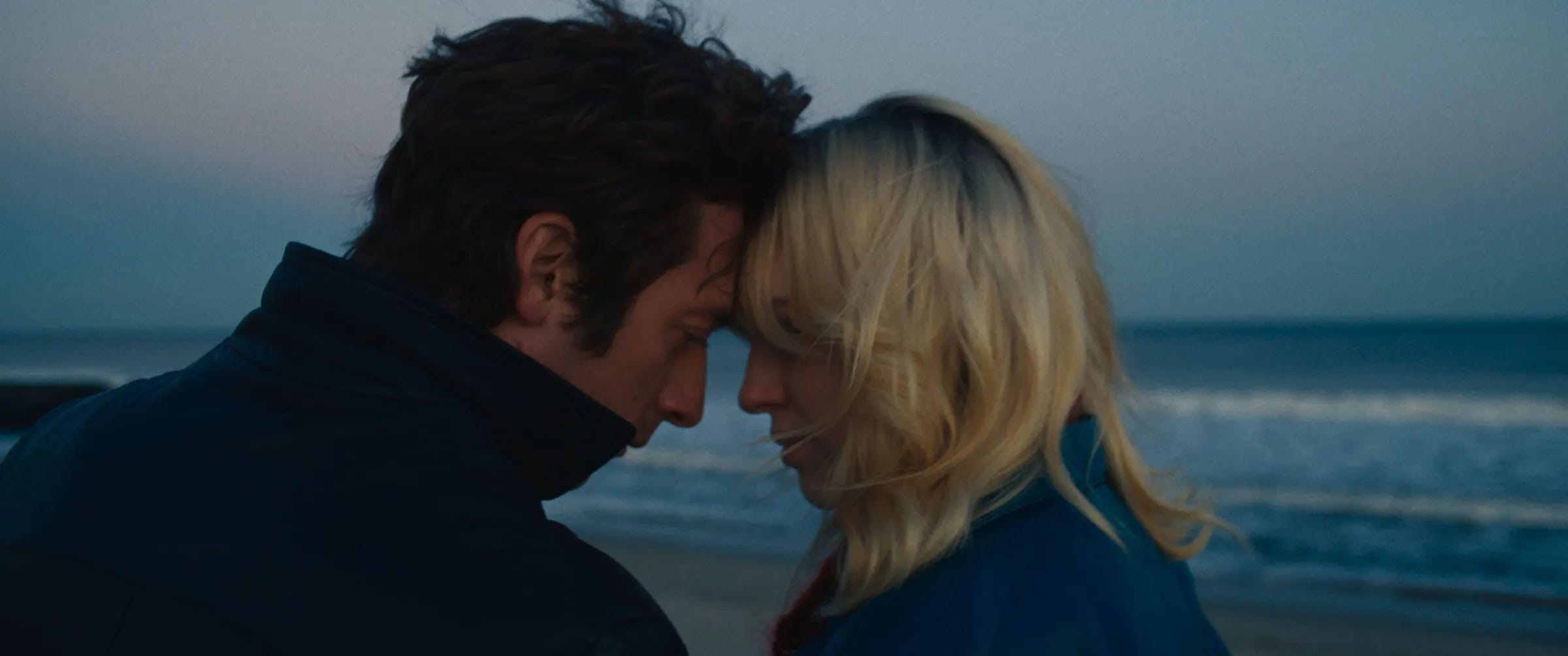
As “The Boss” and his newfound love interest speed down the late night New Jersey streets with the windows down, the radio blasts some classic 80s rock music. Bruce and our female lead exchange momentary glances at each other, streetlights reflecting in their eyes illuminating their profound infatuation and attraction to one another. Incredible lighting and emotive performances from Jeremy Allen White (Springsteen) and actress Odessa Young communicate everything without a single word of dialogue. Their facial expressions, sly smirks, the look in their eyes saying “God, what did I get myself into here”. The full gamut of emotion in four quick cuts. The scene evokes the rush of promise, hope, longing and feeling you have at the beginning of a courtship where you think to yourself: “I am completely raptured by this person”. The rush of “butterflies” in your stomach, your mind starting to plot out a future with this person you barely know, but quickly found yourself falling for.
The scene immediately transports the audience to that moment in time when they themselves felt that way about someone or something.
How is this possibly related to artificial intelligence? The reason the moment was effective, the reason the audience can buy into the look and feeling of the love between the two characters, is because it is a distinctly human experience. Watching two people, experience and take part in that moment, only works because the viewer sees and relates to two other humans operating in a distinctly human fashion. Even me writing these words now renders them less effective, but a machine literally can’t comprehend or create that moment because it will never know that moment or have the ability to experience emotional depth. It will never find itself falling stupidly, deeply, irrationally in love with another human being while a Little Richard record blares out of the stereo, cruising down the late night backroads with wind in your hair.
Artificial intelligence can write a scene in the sense of putting the correct series of words together based on past iterations. It can describe it in detail, producing a sterilized output portraying the activity. There will be a point where the models or tools create video and image aimed at driving the same outcome. No matter the technical quality, an audience can’t resonate with it because we inherently know it’s not the creation of a human being. AI can create words and output - but it can’t fall or be in love. The machines will never have that feeling of early relationship euphoria. ChatGPT or Claude or Grok will never have its heart broken, or look at someone and against all better judgement allow itself to fall for them.
Because of this, no matter how good it is delivering a structured output, what will hold AI back is what will continue to save humanity. It can’t experience human emotion.The end consumer or viewer inherently knows this, it’s in our DNA, so we inherently reject it.
Does this matter? Shareholders, corporations, and global powers aren’t going to slow the development of new technology because it can’t feel or generate emotional pathos.
It’s ultimately up to us, as society, as individuals, to determine how much it matters.
As good as Artificial Intelligence has and will continue to get, there is a natural paradox. It’ll always be artificial. That’s fine when you’re automating spreadsheets and purchase orders, or reviewing legal documents. It doesn’t work when you are trying to make someone feel something. When you are trying to drive connection and meaning. When you are trying to make something human.
I am not sure why a scene in an otherwise middling Bruce Springsteen biopic made me feel a little better about humanity’s outlook, but it did.
We all could use a few reminders that what makes us valuable and human are the same things that OpenAI, Google, Anthropic and even Elon Musk can’t recreate. No matter how much money they are going to throw towards it.
One great scene made me feel something, it made me come to grips with our place in the world, and maybe, just maybe, we’re going to be alright. I just wish the rest of the movie had been as effective.
But hey – it was a plane movie for a reason after all.
Excellent insight! As someone who has known you your entire life (literally), I can say one of your greatest assets is - and always has been - your emotional intelligence. Keep writing!