


Forty Seconds From Glory
40 seconds left in the game. Tie score. A spot in the national championship on the line—a chance to reach the title game for the first time in nearly forty years. Fifty yards, two timeouts, and a single swing of a kicker’s leg stand between you and glory.
The chosen one. The prophecy foretold. The missing link to elevate a starving program and community to greatness.
These are things kids dream about in their backyards. Drew Allar, the quarterback of the Penn State Nittany Lions, had surely played this exact scenario out a thousand times in his backyard—game on the line, the chance to orchestrate the drive of a lifetime.
Everything that had come before—a high-profile recruitment, the turbulence of his first year as a starter, and the steady climb of a strong junior campaign—led to this.
Of course it would happen this way.
With their backs against the wall, Allar would lead the Lions into field goal range. He would provide the walk-off winner. He would secure a rematch with the hated rival Ohio State Buckeyes in the national championship.
The most hyped recruit in a decade—the quarterback who stayed loyal to Franklin when the world came calling—was about to have his “Tom Brady” moment. He would orchestrate a historical moment, then finally slay the hometown team that had overlooked him and deliver a championship.
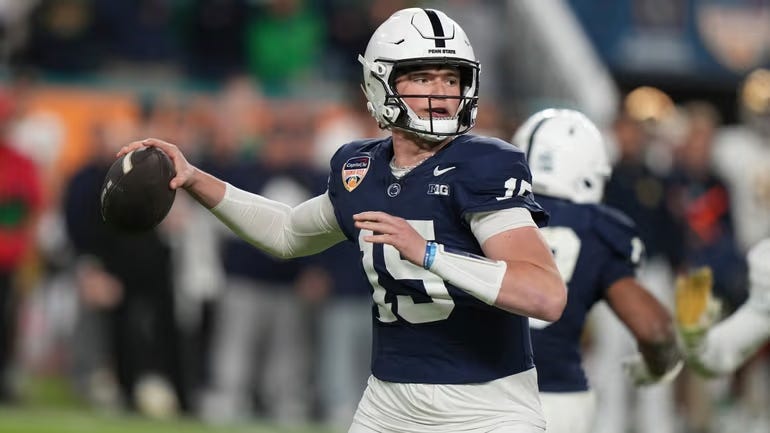
Dreams are fragile. In sports, they usually end in the dirt.
Allar drops back to pass and lets fly a desperate, ill-advised ball across the middle of the field. In the glare of the stadium lights, the “missing piece” melts. A Notre Dame defender steps in front of the route, snatches the ball out of the air, and silences the Penn State sideline.
Notre Dame converts a field goal shortly after, leaving Head Coach James Franklin, the Penn State community, and the college football world at large in a state of collective shock.
Allar slowly trots to the sideline, hands clamped to his helmet, as if trying to hold his world together. Tears stream down his face—a raw, public outpouring of emotion that continues into his post-game press conference.
“I should’ve just thrown it away…we didn’t win the game, I wasn’t good enough” Allar delivers the standard leadership cliches, his eyes darting from side to side in the post-game press-conference. The quarterback avoids eye contact, looking toward the floor. The weight and expectation of a decade’s worth of promise and disappointment become too much to hold back.
A haunting image. The quarterback, the coach, and one of the most storied programs in the sport, left to ponder the same agonizing questions: What happens now? How did we get here?
The image of Allar walking off the field that night in the Orange Bowl—head in hands, emotion pouring out of him—serves as the defining portrait of an era.
No team provides a more stark examination of the binary of success and failure than Penn State. This was a team who came into this season with legitimate national championship expectations – and ended a decade journey with a fired coach, a mass of players leaving having failed to live up to expectations, and a fanbase forced to reconcile how a program on the precipice collapsed into the pit in a single year.
How did a seemingly perfect path to a storybook ending turn into despair? How did a team, so close to the championship game a year ago, fall into the abyss? Why did the relationship between a 104-win coach and his fanbase fracture so severely? And why did the quarterback, whose potential seemed limitless, end his career in tears?
The story is ultimately one of unfulfilled promise, the weight of expectation, and two men.
Quarterback Drew Allar and Coach James Franklin, two figures whose careers and fates would ultimately be defined by the other.
A plot that seemed plagiarized from a Hollywood script by the end resembled a Greek tragedy. But to understand how Penn State’s most promising team in generations ended in despair, you have to go back further.
Back to where the hope began.
A Miracle Worker
Turning the clock back over a decade, nestled in the hills of central Pennsylvania, Penn State Football was a program existing in the shadow of its own survival. Former NFL coordinator Bill O’Brien had spent two years stabilizing a program spiraling from scandal and tragedy, keeping it above .500 despite crippling sanctions—a feat that felt miraculous given the circumstances.
In December of 2013, O’Brien was ready to return to the NFL after a taxing two years, accepting the Houston Texans head coaching job on New Year’s Eve. Penn State—located in State College, Pennsylvania, a place known as Happy Valley—found itself searching for a leader for the second time in four years—a jarring reality for a program that had previously employed one man for nearly five decades.
Enter: James Franklin.
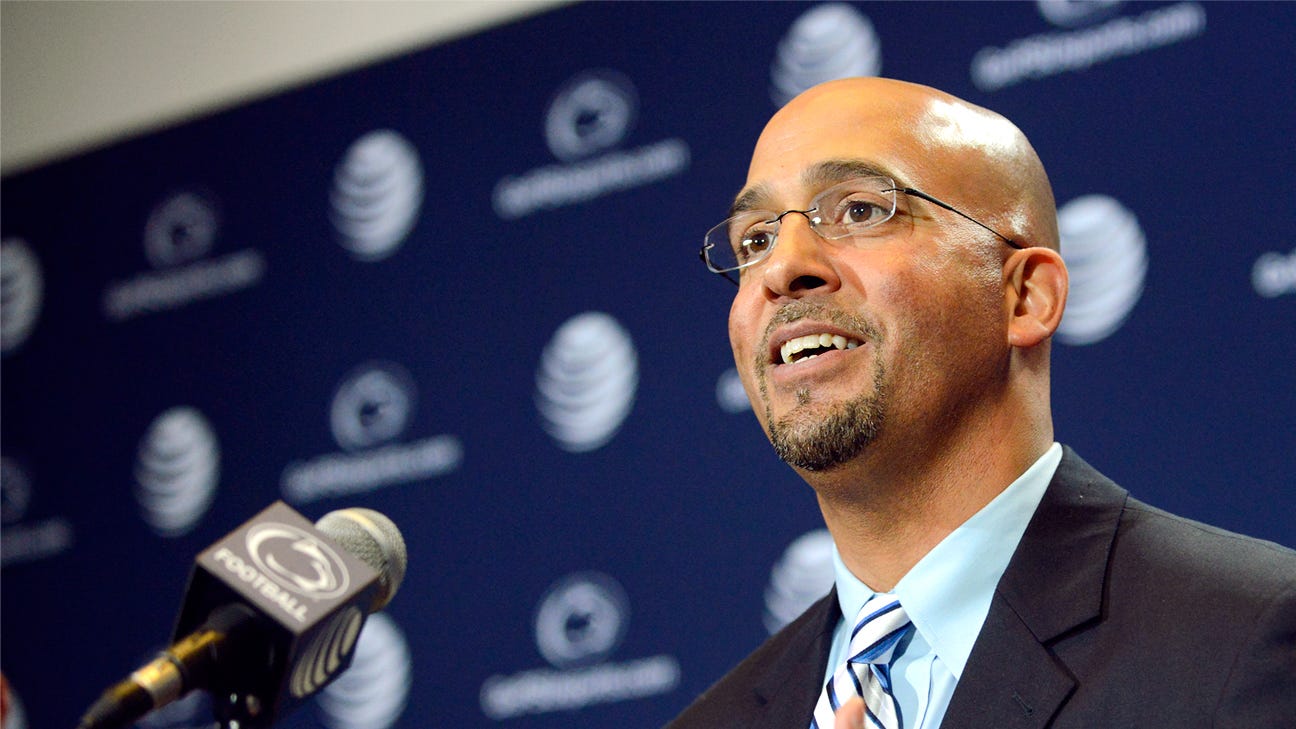
Franklin arrived in State College branded a ‘miracle worker’ from Vanderbilt, a label he was more than happy to wear. Employing a borderline delusional optimism, dynamic personality, and ability to identify under the radar recruits, Franklin led a historically weak program to consecutive nine-win seasons in the famed South Eastern Conference.
Young, high energy, from Pennsylvania – Franklin embodied the type of leader Penn State desperately required as it found itself in the midst of the ramifications from the scandal. A postseason ban and a decimated scholarship count threatened the program’s very ability to compete. On paper, the fit seemed perfect from all sides; however, the promotion to a bigger job, with more recent success, came with pressure. It’s great to build a Cinderella, but can you do it at the highest level? Franklin succeeded at Vanderbilt—a program where success itself seemed miraculous—but in the cutthroat world of major college football, past performance was only proof of concept, never proof of permanence. At Penn State, he would need to prove it against the best of the best, again. And again. And again.
O’Brien had provided the foundation; Franklin was hired to build the house. Emulating the blueprints of Alabama and Ohio State—the gold standards of the era—Penn State sought a CEO-style leader who could weaponize recruiting and drag the program out of the shadows and back into the national elite. At the time, college football had entered the era of the CEO coach—men like Nick Saban and Urban Meyer who controlled every facet of their programs, from recruiting to game planning to media strategy. Franklin embraced the model completely.
The first two years of the new regime were defined by mediocrity: back-to-back 7-6 finishes in lower-tier bowls that suggested a program treading water. And midway through the 2016 season, Franklin’s pivotal third year, things seemed to be stuck in neutral.
Then, in the span of one October night, the trajectory shifted.
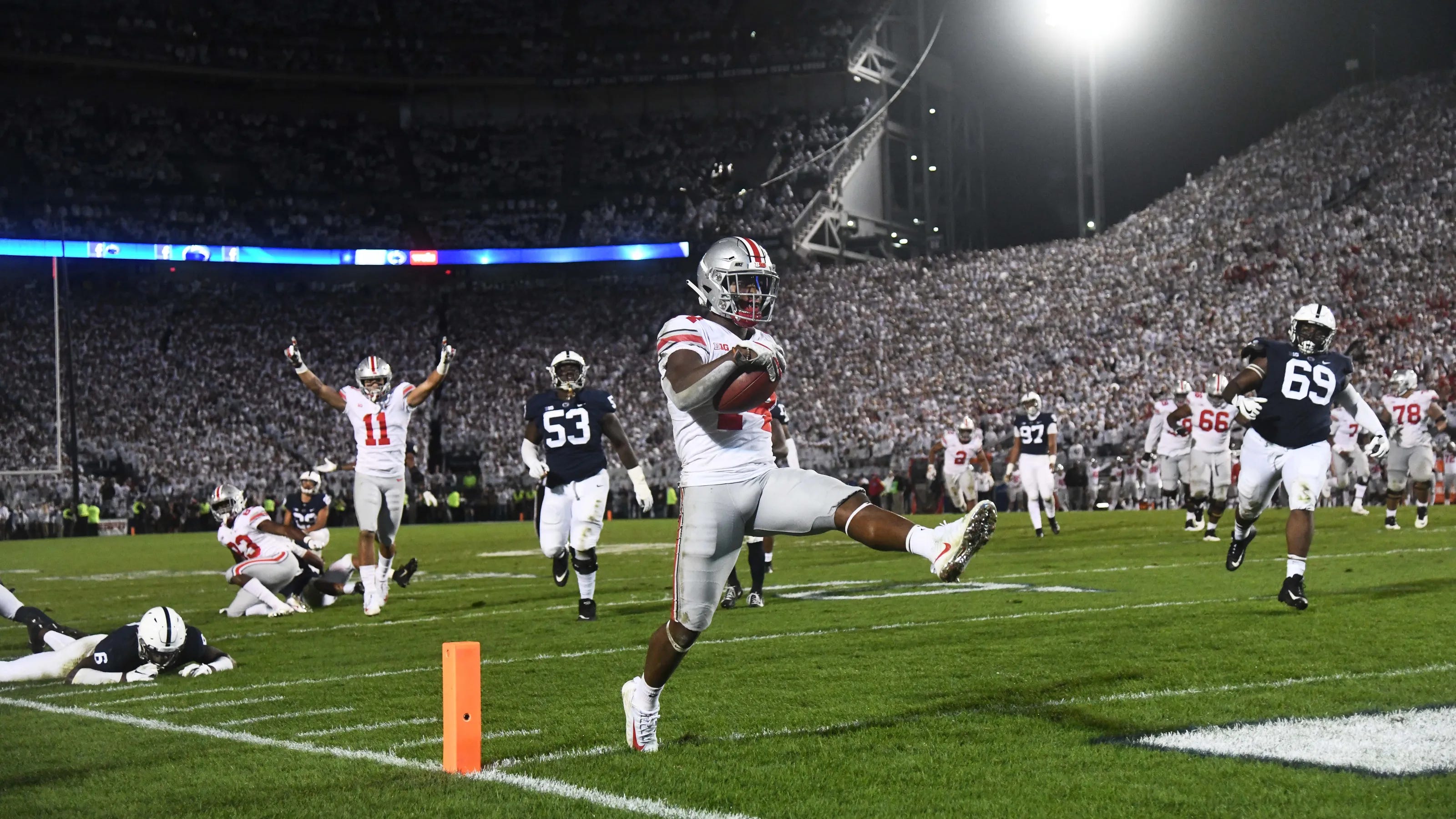
The football gods finally looked toward Happy Valley. Hosting the 2nd ranked and undefeated Ohio State Buckeyes, the Nittany Lions rallied as massive underdogs when defensive back Grant Haley scooped a blocked field goal and sprinted not just into the endzone, but into Penn State lore.
It wasn’t just a touchdown; it was a program-defining exorcism. Franklin and the community would finally have their program defining win after the darkness of the last four years.
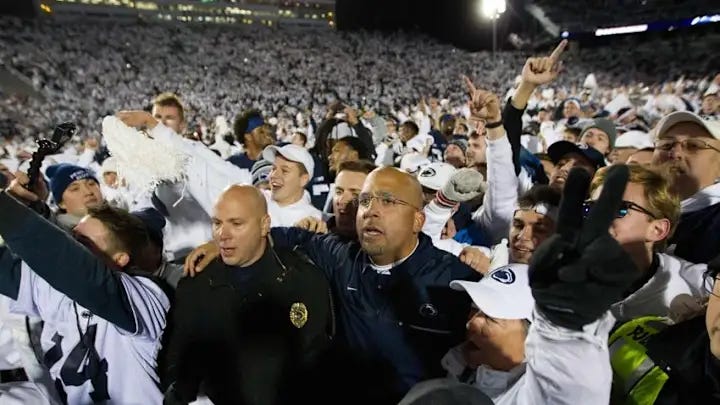
Students and fans flooded the field of Beaver Stadium against the backdrop of Penn State’s famed “White Out” night game, to celebrate a win over a top-five titan—a moment that announced the Nittany Lions were ready to ascend. Parlaying that momentum into a division championship, the Lions would end up winning the Big 10 conference in dramatic fashion. Despite being left out of the four team playoff that year, the Lions played in the famous and storied Rose Bowl. Against the horizon of the famed Pasadena background, sun setting into the mountains, Penn State and the Trojans of Southern California staged one of the most entertaining games of the season. In what would become an ominous sign, Franklin and the Nittany Lions lost to USC that night, but all prognostication was pointing up.
The Ohio State win acted as a propellant for Franklin and his program. A coach who was on the hot seat in early October was holding the Big Ten Championship trophy in December. Young, exciting players like Saquon Barkley (a generational talent) and Trace McSorley (a scrappy, underrecruited quarterback) who committed to the program in the middle of the heaviest impact from the sanctions would lead the Lions back to greatness.
The victory along with a Big10 conference championship provided validation for Franklin’s program. His approach had been methodical, bordering on obsessive. Every detail mattered—from recruiting scripts to practice schedules to media talking points. The 2016 breakthrough felt like vindication: his system worked.
What couldn’t be seen yet was the same control that built consistency would eventually suffocate freedom and growth.
In the aftermath of a turning point season, those “Fire Franklin” chants that echoed in the stadium in mid-October seemed far away now.
They would, in time, return.
Always Bridesmaid, Never a Bride
The 2016 season had been written for a Hollywood screenplay; in the rise from the ashes the program would be lifted by heroes who came in the darkest hour. The man hired after drastically outperforming at a historically weak program would bring a national championship back to a storied program, taking his place among the all-time greats.
As in life, College Football reality is messier and more unpleasant than Hollywood films.
The next three seasons established Penn State as one of the strongest programs in the country. Franklin utilized the 2016 momentum, stacking top-tier recruiting classes and wins—31 victories from 2017 through 2019. But the 2016 Ohio State upset that was supposed to launch a dynasty became an apparition. Penn State lost heartbreaking games to the Buckeyes in both 2017 and 2018 by a combined two points. The annual ritual of falling short against elite opponents became a sword hanging over the Franklin era: questionable coaching decisions, physical failures at critical moments, and gut-wrenching ‘what ifs’ that would linger for years.
The pattern was set: Penn State could beat anyone they had more talent than on paper, but they were paralyzed when facing their equals. When the lights were brightest, facing an elite opponent, Penn State lacked the execution or difference making performances to win.
In 2018, Penn State once again found itself on the precipice of greatness – only to fall victim to a coaching miscue in the biggest moment. Trailing by a single point with two timeouts in hand, gunslinger Trace McSorley orchestrated a drive into Buckeye territory. With less than 90 seconds remaining and a timeout, the Lions offense found itself roughly 15 yards from comfortable field goal range. 45 feet was all that separated Franklin from a second win against a top five Ohio State in three years –a victory likely locking up another Big10 Championship game appearance.
Fourth down, possibly the final play, five yards to go. McSorley unexpectedly handed the ball off to running back Miles Sanders who was stuffed immediately.
Roughly 108,000 people fell silent, utterly shocked by the final play call. Ohio State took over, ran out the clock, and walked off the field with another win over Penn State. A pattern becoming a curse.
After the loss, Franklin, caught up in the emotion and frustration of the moment, delivered a post-game press conference that would define the rest of his tenure.
It was here he laid the ultimatum that would determine his legacy and longevity.
"We’ve gone from an average football team to a good football team to a great football team... but we’re not an elite football team yet. We’ve gotten comfortable being great. We will no longer be comfortable being great. We’re going to find a way to take that next step... because we’ve been knocking at the door long enough."
In the immediate wake of the sanctions, mere survival—just being competitive again—had been a triumph. No longer. Penn State, and the man leading the team, would no longer be content to simply bully inferior opponents. The new standard was narrow and unforgiving: wins against the best of the best. The program, the community, and the man in charge were finished with moral victories. They were tired of being “close”.
Success would be defined not just by number of wins, but wins against Ohio State and Michigan. Franklin, and by proxy the fans, wouldn’t be satisfied with just being a “good” coach – he needed to be “elite”.
Seeds of Discontent
Cracks began to form in the marriage between Franklin and Happy Valley long before the October 2025 collapse. Between 2019 and 2021, the program entered a state of gilded stagnation. While an 11-win season in 2019 kept the critics at bay, Franklin’s name became a permanent fixture in rumors for premier openings at USC and Florida State. To the Penn State community—a fanbase that values loyalty as much as yardage—his silence felt like a leverage play, a way to extract more resources without commitment.
The breaking point wasn’t a loss, but a contract. In 2021, coming off a mediocre 7-6 season, Franklin secured a massive 10-year, $75 million contract extension with a staggering buyout if he was ever to be fired without cause. The massive commitment wasn’t just about money—it was about leverage. Franklin and his agent had negotiated a buyout so massive, and the terms so favorable to the coach, it effectively gave him ironclad job security. He’d built the program his way; now he’d ensured no one could take it from him. But in seizing total control, he’d also accepted total responsibility. There would be no excuses left.
Message boards and social media sites lit up with frustration. Franklin’s flirtation with other jobs, his complaints about lacking resources—it all rang hollow without ‘elite’ results to back it up.
The “Fire Franklin” chants of 2016 were replaced by a cold, transactional resentment. He was now a CEO with a massive salary and a “Great” product, but no “Elite” results. The man and his supporters stayed optimistic and persistent, others felt he would always be asking for more – resources, players, staff, money – without delivering his end of the bargain and shopping for his next gig.
Franklin knew that despite financial security, the seat was getting warm. He had the money, the facilities, and the security—but he still didn’t have a championship.
To save the marriage, he needed a difference maker. He needed divine intervention.
He needed a quarterback.
The Prince Who Was Promised
Just 100 miles from Columbus, shrouded by the overbearing shadow of Ohio State, lies the birthplace of Drew Allar. Initially overlooked by the hometown juggernaut as a mid-tier prospect, Allar spent the COVID pandemic transforming himself into a phenomenon. In less than two years, he charted a meteoric rise from a forgotten three-star recruit to the No. 1 quarterback in the nation.
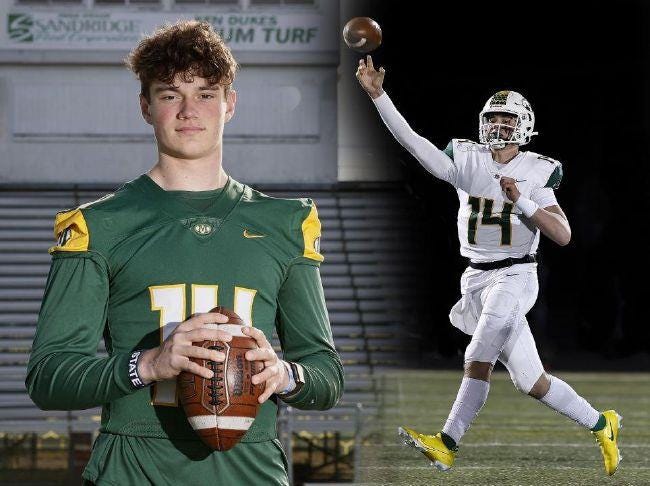
For Franklin and Penn State, Allar was the missing evolutionary link. The Nittany Lions had won plenty of games with gritty overachievers like Trace McSorley and Sean Clifford, but they had never possessed a true “unicorn”—a prototype field general capable of going blow-for-blow with the NFL talent at Ohio State. Allar was that dream. Standing 6’5” with a rocket arm, he was straight out of central casting. The comparisons to Buffalo Bills QB Josh Allen were immediate and intoxicating; the kid from Medina possessed the physical traits that made scouts salivate and social media accounts explode.
The true victory for Franklin and his staff wasn’t just securing his talent; it was Allar’s loyalty. When Ohio State finally panicked and offered him a scholarship late in the recruiting cycle, the quarterback didn’t flinch. He rejected his childhood dream school to stay with the coach who believed in him before anyone else.
When asked why he turned down Ohio State, Allar was diplomatic but firm:
“’I have a great amount of respect for the Ohio State coaches and their program, but I just didn’t feel like it would be the best fit for me, personally. I feel like Penn State is a better fit for me.’”
Before he ever took a snap, Drew Allar had already delivered Franklin a win over the Buckeyes.
Finally, the Nittany Lions would have the elite quarterback required to be the difference-maker in the biggest games. The 2022 recruiting class, led by Allar, offered the newly extended Franklin the firepower to finally clear the hurdle that had defined his career.
Allar’s commitment was a line of demarcation for Franklin and the Nittany Lions.
The future, for both the program and the man in charge, would be tied to the success of their prized recruit from Central Ohio.
A Glimpse of Potential
Penn State fans wouldn’t have to wait long for a glimpse of their dream. An appetizer arrived on a humid Thursday night in West Lafayette, Indiana, midway through the 2022 season opener against Purdue. When veteran starter Sean Clifford retreated to the locker room with an injury, the “Allar Era” began not with a gradual introduction, but with a sudden, high-stakes thrust into a hostile environment.
Allar navigated the pocket with a surgical, statuesque calm.
On the first meaningful drive of his collegiate career, the eighteen year old avoided the chaos of the Purdue pass rush with the poise of a fifth-year senior. Then came the throw that would provide an allegory for the next three years of Penn State football.
Dropping back in shotgun formation, navigating the collapsing pocket, Allar effortlessly lofted a ball downfield. With a flick of the wrist that looked almost indifferent, he lofted a twenty-five-yard crescent through the Indiana night. The ball tracked a perfect, smooth arc, clearing the fingertips of an outstretched linebacker and splitting a pair of lurking safeties to find tight end Tyler Warren in a window that shouldn’t have existed.
The pass hit Warren’s hands and fell to the turf—an incompletion that was entirely irrelevant. The stadium, and the thousands watching on national television, had seen a unicorn.
It was a pro throw, a physical manifestation of the “Elite” standard Franklin had promised years earlier. The fact that the drive eventually stalled at midfield, and Allar’s next pass was wildly incomplete, mattered less than a glimpse of the potential: if a true freshman could manipulate a defense and make a throw like that, what would the finished product look like?
For a fanbase that had grown weary of game managers like Clifford and McSorley, that single incompletion was more intoxicating than a decade of safe completions. It was the lightning bolt of hope and promise that would sustain James Franklin’s credit with the community for the next thirty-sixth months.
Growing Pains
By 2022, Penn State had become firmly entrenched in the upper-middle class of college football. An eleven-win season capped by a Rose Bowl victory provided a glossy finish, but the sheen was deceptive. Once again, the Nittany Lions had surrendered second-half leads to Ohio State and Michigan. The victories were enjoyable and consistent, but the losses felt defining. Hope remained an intoxicating drug; the optimistic part of the fanbase convinced itself that Allar, after a year of seasoning behind the veteran Clifford, was the missing ingredient required to finally reach the summit.
The following year proved that hope, while intoxicating, is often a cruel mistress.
Allar’s first season as the starter was characterized not by the “pedal to the metal” aggression fans craved, but by a program stuck in neutral. While Allar set records for consecutive passes without an interception, the milestone felt more like a condemnation. On the surface, sure, the offense looked efficient and avoided turnovers. However, those watching closely saw a unit and a quarterback who looked timid, out of sync, and paralyzed in the biggest moments.
The pivot points the community expected never arrived. Against the measuring-stick defenses of Michigan and Ohio State, the unit looked less like a national contender and more like a mid-major program overwhelmed by the moment. Allar finished the year with an astounding 25-to-2 touchdown-to-interception ratio, yet his shallow yards-per-attempt told the real story: a Ferrari being driven like a minivan. A horrific performance in the Peach Bowl against Ole Miss turned whispers of doubt into a roar.
The question that haunted Happy Valley was whether Allar was playing scared, or being coached into submission. Franklin’s offensive coordinators had built a system designed to minimize errors, not maximize explosiveness. For a quarterback with Allar’s arm talent, the scheme felt like a cage. He wasn’t learning to process chaos and make off-script magic; he was checking down to safe, short throws and avoiding mistakes. In big games, when the conservative script was exposed, Allar had no improvisation or aggressive muscle memory to fall back on.
Franklin had protected his quarterback from failure—and in doing so, prevented him from developing the scar tissue elite quarterbacks need.
That pattern ingrained in the program’s reputation; Penn State shrinking in the biggest moments. Multiple blown leads against Ohio State. An offense that went conservative when aggression was needed. Had Franklin’s vice-like grip on every aspect of the program stifled the creativity and freedom required to win championship games? After almost eight years, the Lions were always on the wrong side of the big play.
Franklin’s response to media questions about his tactics rarely satisfied—always some version of (paraphrasing) “Obviously, we will look to evaluate everything and get it fixed." The questions had no easy answers. Was it coaching? Player development? Or was Franklin simply a great builder without the killer instinct to finish?
The flip side over having total control of a program is that when it goes well you can earn a $75mm contract. When it goes badly, there is really no one else to blame. The proverbial monkey on the back of big game failures would follow Franklin until he finally won one.
The season leading up to that Orange Bowl game against Notre Dame, as the Nittany Lions prepared for their first true playoff run—highlighted by a grit-and-grind overtime win at USC and a bruising encounter with Oregon—the old ghosts remained.
Penn State was at the table – thanks to an expanded twelve team playoff field – but the team, and Allar himself, didn’t look like they belonged at the head of it.
By the time Penn State reached the Semifinal Orange Bowl, Franklin and Allar were trapped in a cage of their own making.
Franklin’s need for control and fear of upsetting the consistent standard had created a risk-averse culture. A conservative philosophy had been coded into his quarterbacks’ decision-making. His coordinator choices, and the staff at large, had prevented Allar from developing the improvisational skills and aggressive mindset elite quarterbacks need. And beneath it all, Franklin’s need for validation meant he could never simply coach the game in front of him; he was always coaching against the criticism, the doubt, the ‘not elite’ label.
When the moment arrived—40 seconds, tie game, championship on the line—Allar was asked to do something Franklin’s program had never equipped him for: abandon the script and trust chaos.
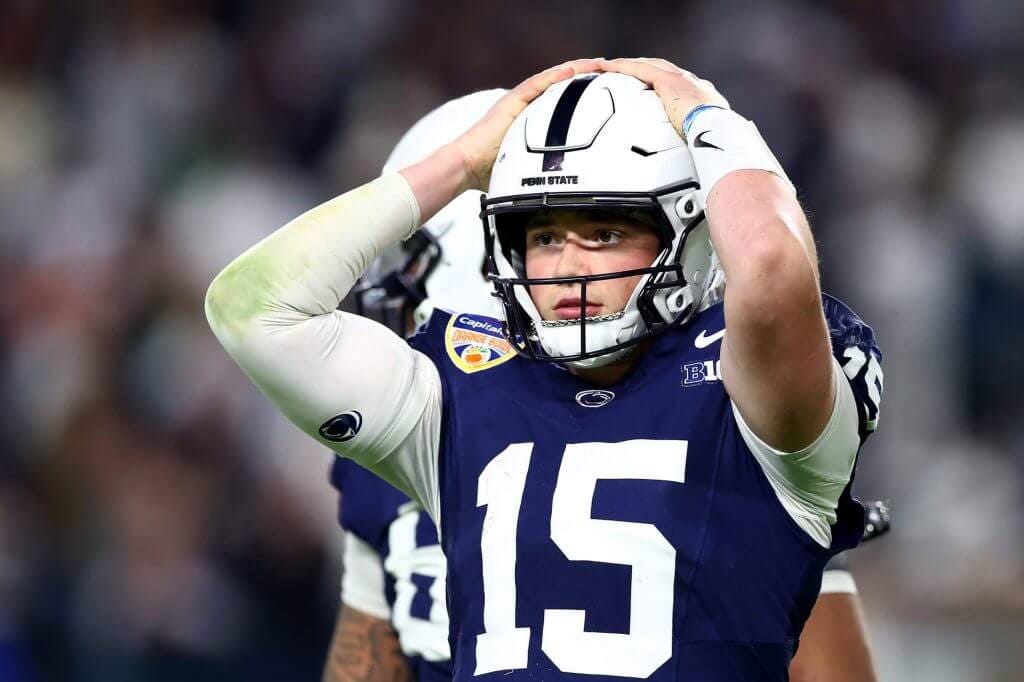
The interception wasn’t just a bad throw. It was the inevitable result of a philosophy that had brought them 99% of the way to the summit, but could never carry them to the final step. When the ball left Allar’s hand, ten years of questions were answered.
A Shot at Redemption
It’s easy to look back now and point to the heartbreak in Miami as the moment the dream died—the moment the promise of James Franklin leading Penn State to a championship on the back of a prolific quarterback finally evaporated. That is the portrait history will likely draw; history rarely has time for nuance. But the reality was more complicated. The Nittany Lions actually returned the majority of their starters in 2025, led by Allar, who turned down the NFL Draft for one final run.
The “unfinished business” angle was espoused hard.
Even before the season began, however, something seemed amiss. Franklin’s pre-season comments carried an edge that betrayed something festering beneath the surface. ‘Most programs would be envious of the success we’ve had here,’ he said, repeatedly.
The man who’d once preached 1-0 mentality—focus only on the next game—was now looking backward, cataloging achievements, seemingly exhausted by the burden of never being enough. The community had given him time, resources, and a $75 million contract. But they hadn’t given him what he truly wanted: recognition as an elite coach. And in college football’s binary world, “very good” was just another word for “not good enough”.
Penn State stumbled to a rocky 3-0 start against inferior opponents. Allar did not look like the senior leader or projected top draft pick who was supposed to “take the next step” with a new trio of transfer receivers. Nittany Nation collectively held its breath, but the cracks in the facade were impossible to ignore. The weight of a decade of expectation and promise seemingly formed an anvil over the head of the coach and his quarterback.
Allar had entered his senior season as a projected first-round pick, but failed to look the part. Three years in various systems had made him efficient but not dynamic. The transfer receivers Franklin brought in—supposedly the missing pieces—only highlighted the problem: Allar had the weapons, but couldn’t make the most of them. Perhaps, after three years of being taught to avoid mistakes above all else, he’d internalized the fear so completely that freedom wouldn’t have mattered. The freedom and aggressiveness he showed at Medina High, neutered by the pressure of being labeled a “savior” for not just thousands in a stadium, but an entire fanbase.
A kid who had a thousand watt smile and rosy cheeks when he arrived in State College now looked exasperated; weighed down by the eyes of the college football world expecting a championship run and a Heisman trophy.
The Nittany Lions heartbreak would not have to wait until Ohio State this time.
The End
Everything had built to this: early October, primetime, 107,000 fans packed into Beaver Stadium’s famed White Out to watch two undefeated teams. Penn State versus Oregon—a rematch of last year’s Big Ten Championship loss. A chance at redemption.
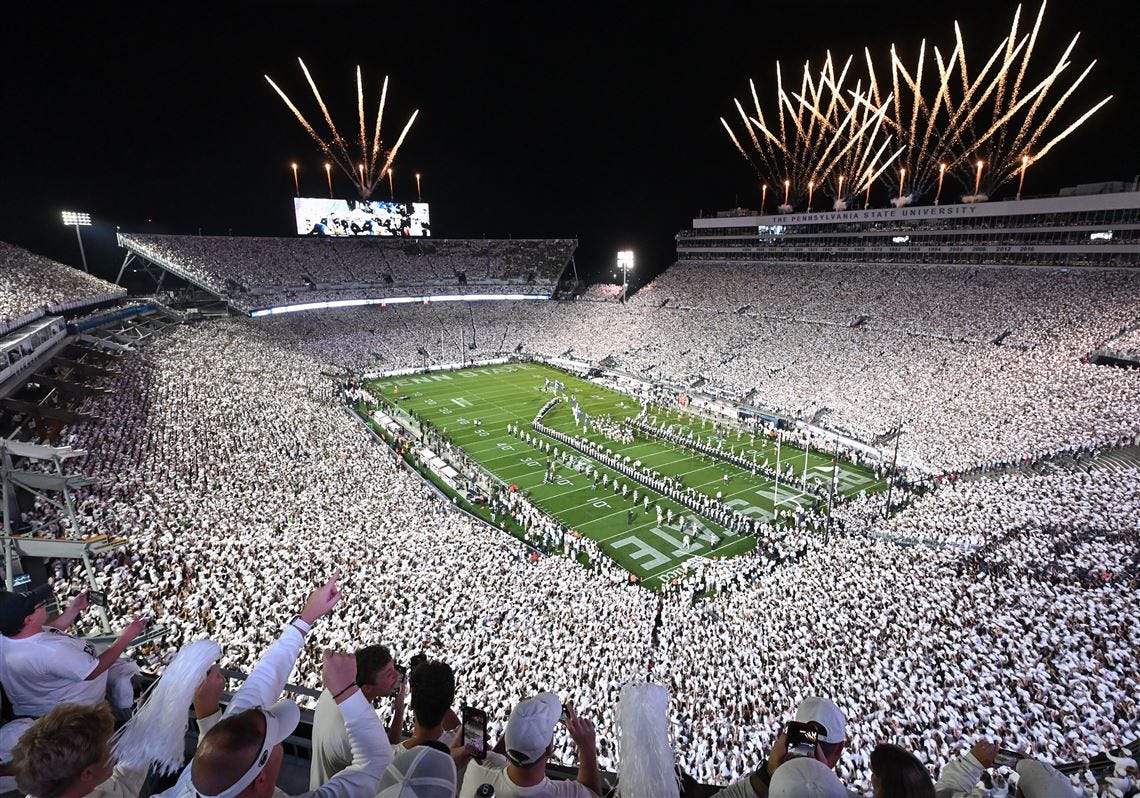
For three quarters, doubt crept through the stadium like fog. Allar struggled to find rhythm, frequently sprinting to the sideline in frustration. Franklin battled with officials, unleashing a decade’s worth of pent-up anger. When a fumble return touchdown was overturned—a blade of grass the difference between euphoria and dread—the entire stadium seemed to collectively recognize the moment. They’d been here before.
Then the fourth quarter arrived, and hope returned. Trailing by multiple scores, Allar suddenly came alive. Forced to abandon caution by desperation, he threaded passes through the autumn night, rallying the Lions to tie the game with thirty seconds left. Overtime.
Penn State struck first, a bruising touchdown drive that felt like the entire community willing the ball forward. Up seven, they needed one stop. One play to exorcise a decade of demons. One play to prove they were finally different.
Oregon converted on fourth down to tie it. Double overtime. Penn State’s ball again. Allar had forty seconds in Miami; now the clock was irrelevant. Just get the ball into the endzone.
He dropped back and forced a throw into triple coverage. The Oregon safety stepped in front—the same setup, the same mistake. The interception floated into the opposing safety’s hands. Game over.
Allar collapsed to the turf, staring into nothing. Franklin stood frozen, the thousand-yard stare of a man who’d just watched his fate sealed. There were eight games left on the schedule, but the looks on their faces told the story.
The dream was over. Everything that followed would just be the aftermath.
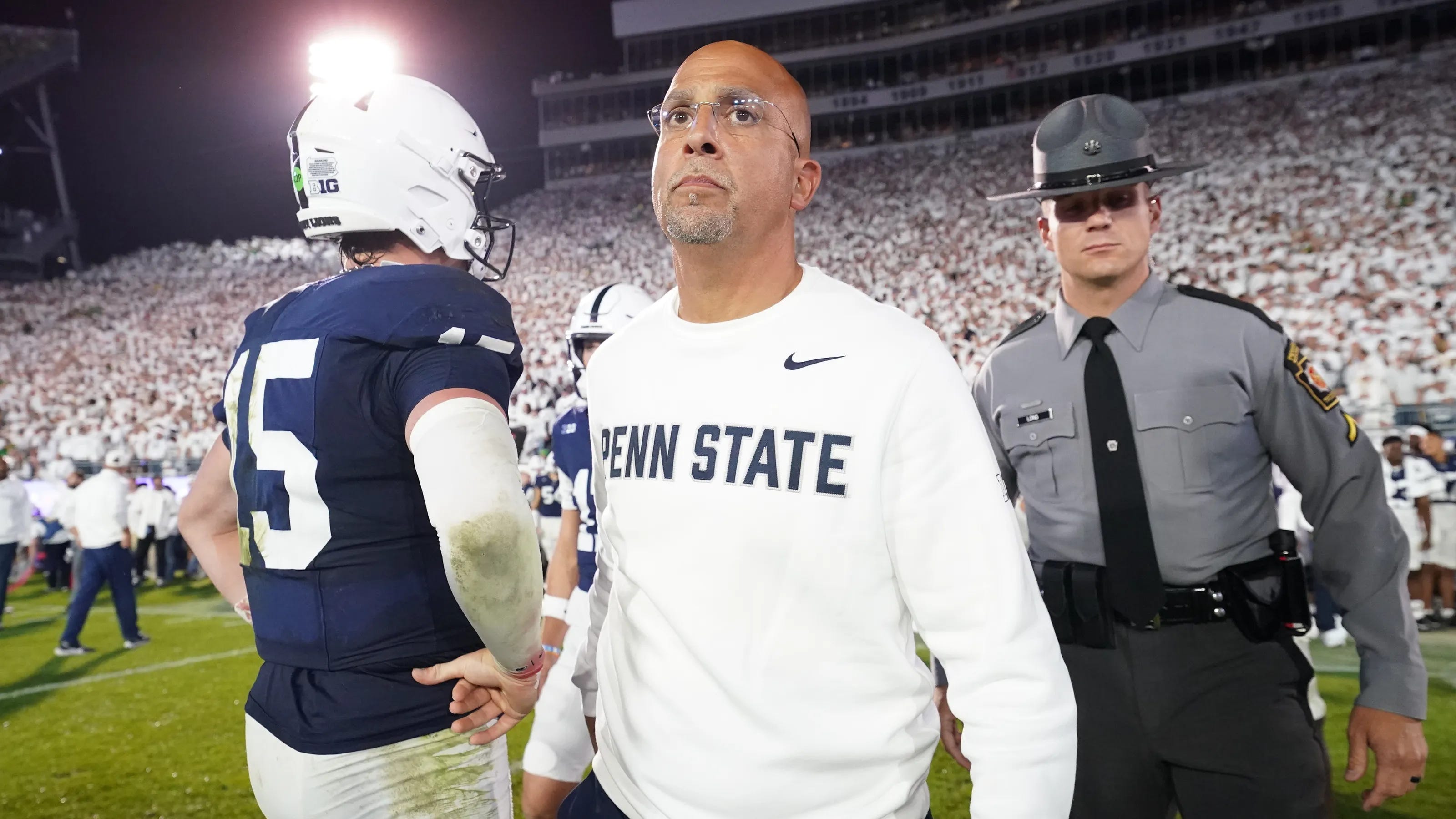
The Oregon loss resulted in a psychic fracture within the team. The following week, the Lions collapsed against a winless UCLA squad on the road, then followed it up with a loss to a sub-.500 Northwestern team at home.
The football gods are cruel writers, particularly around endings.
Midway through the Northwestern game, Drew Allar fell to the grass with a twisted ankle. The quarterback who had been delivered to Penn State with the pressure of driving a program to new heights, carted off the field with tears once again streaming down his face. After the game, Franklin announced the inevitable: the quarterback’s season, and Drew’s college career, were over.
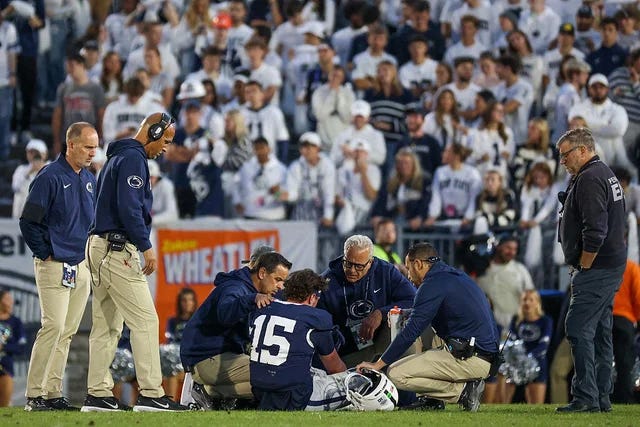
Frustration erupted down upon the man who had been greeted as a savior ten years prior. The “Fire Franklin” chants that had echoed through Beaver Stadium in October 2016 returned, louder and more certain. They’d been temporarily silenced by hope. Hope that with an elite quarterback, surrounded by more blue chip talent, Franklin’s program would finally reach that “elite” standard he set after the second consecutive loss to Ohio State in 2018. That hope had finally run out.
Franklin was fired less than twenty-four hours after the loss. The $50 million buyout and the remaining term of his contract be damned. There would be no saviors. There would be no happy endings in Happy Valley for the coach or his quarterback.
New Chapters and Fresh Starts
Time heals all wounds, and history will likely be kind to the legacy of James Franklin and Drew Allar. Allar ends his career as the program’s all-time leader in completion percentage. He won more games in a single season than any other signal-caller in Nittany Lion history. Despite his season-ending injury, the quarterback remained a fixture on the sidelines, helping his backup guide the team to a 4-3 finish. His NFL story has yet to be written.
For Allar, the ending was particularly cruel. Four years of carrying expectations that would have broken most 18-year-olds, and what does he have to show for it? Program records that feel hollow, a college career that ended on a cart, and the knowledge that he’ll forever be the ‘what if’ quarterback in Penn State lore. The kid who rejected Ohio State to stay loyal, who returned for his senior year when he could have left for the NFL, who did everything asked of him—and still couldn’t deliver the moment everyone dreamed of. That’s the weight he’ll carry into the League.
Emotions remain tense—a consequence of Franklin immediately hitting the national television circuit to espouse a desire to coach elsewhere, yet refusing to issue any genuine sentiment of gratitude towards Penn State and the community. It didn’t help matters that a few weeks later, Franklin and his new staff lured the majority of the 2026 signing class with him to Virginia Tech.
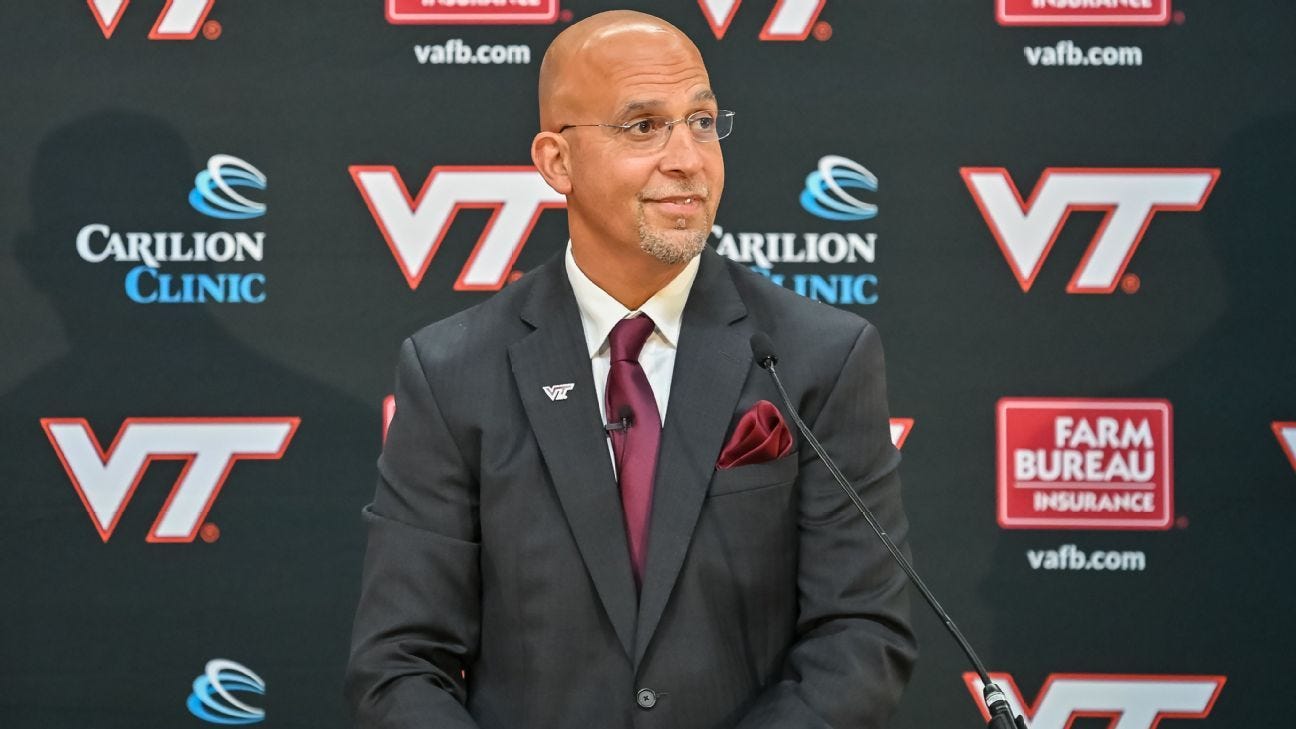
Regardless, History will reflect positively on the coach. Franklin took a program that was barely surviving and turned it into a perennial Top 10 mainstay. Penn State won nearly every New Year’s Six bowl game under his watch and won multiple playoff games for the first time in school history. He leaves for Blacksburg with 104 wins—tied for second-most in program history—having won nearly 70% of his games. The fracture between Franklin and the fanbase, the transactional nature and mutual feelings of lack of appreciation, only would have been resolved with a championship.
As Penn State turns the calendar to 2026, it is forced to reckon with what could have been. Before the program can begin a new era with a new coach in Matt Campbell, it needed a final chapter for the coach and quarterback who were supposed to lift the program to the summit.
In the end, it was fitting that Franklin’s tenure ended alongside Allar’s. Both arrived in Happy Valley carrying the weight of immense promise; both accomplished great things. However, since that ‘Great to Elite’ declaration, it would not be enough for either man to simply win more than they lost. They needed to win the biggest battles. Now both start new chapters, a cloud of “how did it all go so wrong” hanging over their legacies.
In 2026, all parties receive a fresh start—Franklin in Blacksburg, Allar in the NFL, and Penn State with Campbell. The marriage had become a cycle of anger, frustration, and disappointment. It had to end.
There is a saying I heard once:
“If you can sell hope, you can usually keep working. When you run out of hope, you get run out of town.”
Ultimately, the story of Franklin and Allar is one of two fates intertwined. They needed each other to reach the mountaintop, and they came agonizingly close to the peak. But despite the achievements along the way, time simply ran out.
Hope had run out.
Fantastic! This is an excellent read and recap of the Franklin era.
This is so good. You wove this together exceptionally. Really cool to learn more about the history and the details. Great stuff 🔥